
Home > Shipwreck Blogs > The Complete VOC Gold Ducat Collection
During the 17th and 18th centuries, the wealth and power of the Dutch East India Company (VOC) reached extraordinary heights. The VOC maintained its own army, had the authority to declare war, operated the largest merchant fleet in the world, and established offices from South Africa to Japan.
To finance its extensive trade network, the VOC sent approximately 15 to 20 treasure-laden ships to the East each year. Among the cargo, a wide variety of coins were transported. In the early years, Spanish colonial reales dominated Asian trade, but from around 1630 onwards, Dutch trade coins gained increasing prominence. The most famous of these was the Dutch gold ducat.
Gold ducats were shipped in much smaller quantities than silver trade coins. In the 17th century, they were transported in modest numbers, with shipments increasing somewhat in the 18th century. Most gold ducats were intended for recoining at South Indian mints, although some entered circulation in the Indonesian Archipelago and Ceylon.
During the 17th and 18th centuries, the wealth and power of the Dutch East India Company (VOC) reached extraordinary heights. The VOC maintained its own army, had the authority to declare war, operated the largest merchant fleet in the world, and established offices from South Africa to Japan.
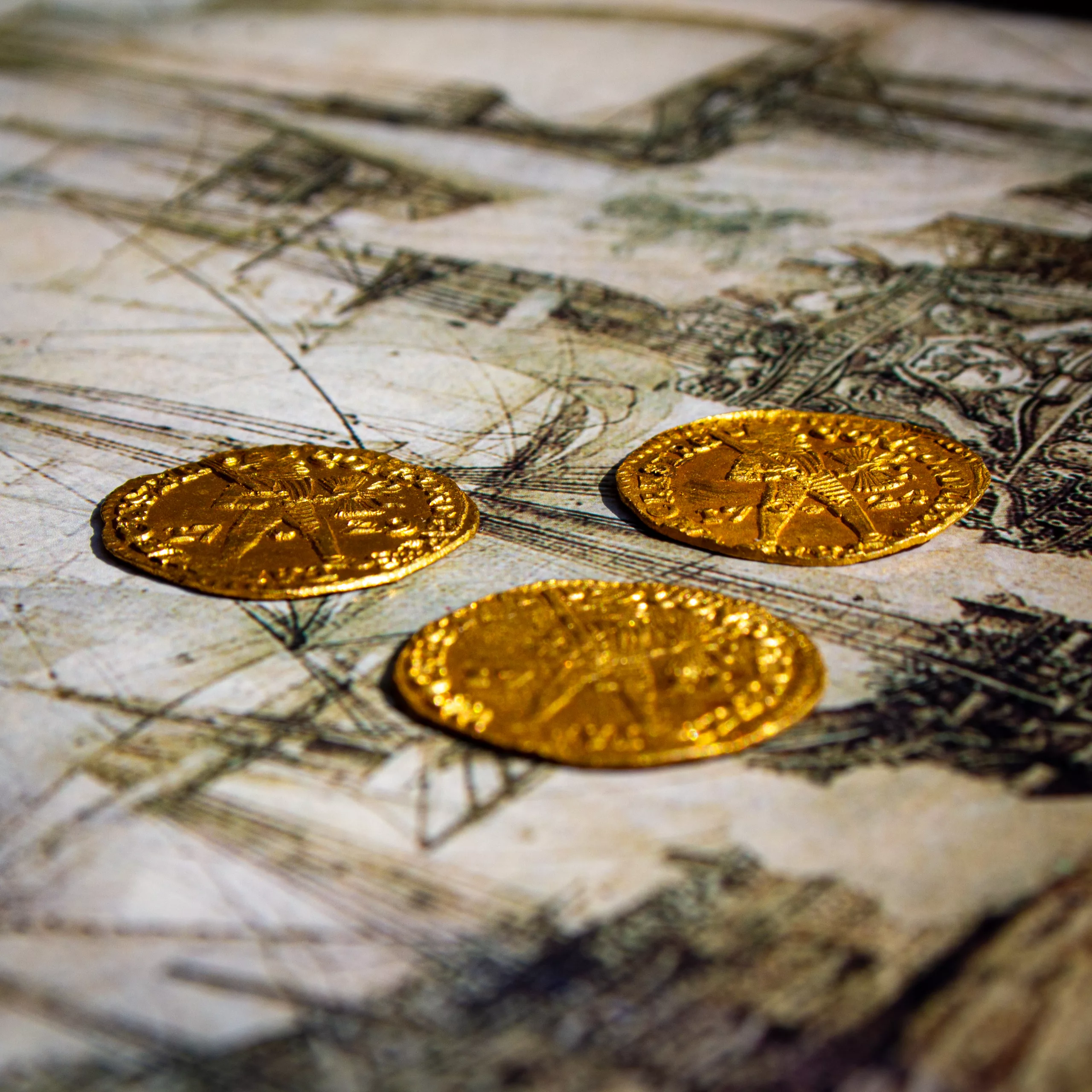
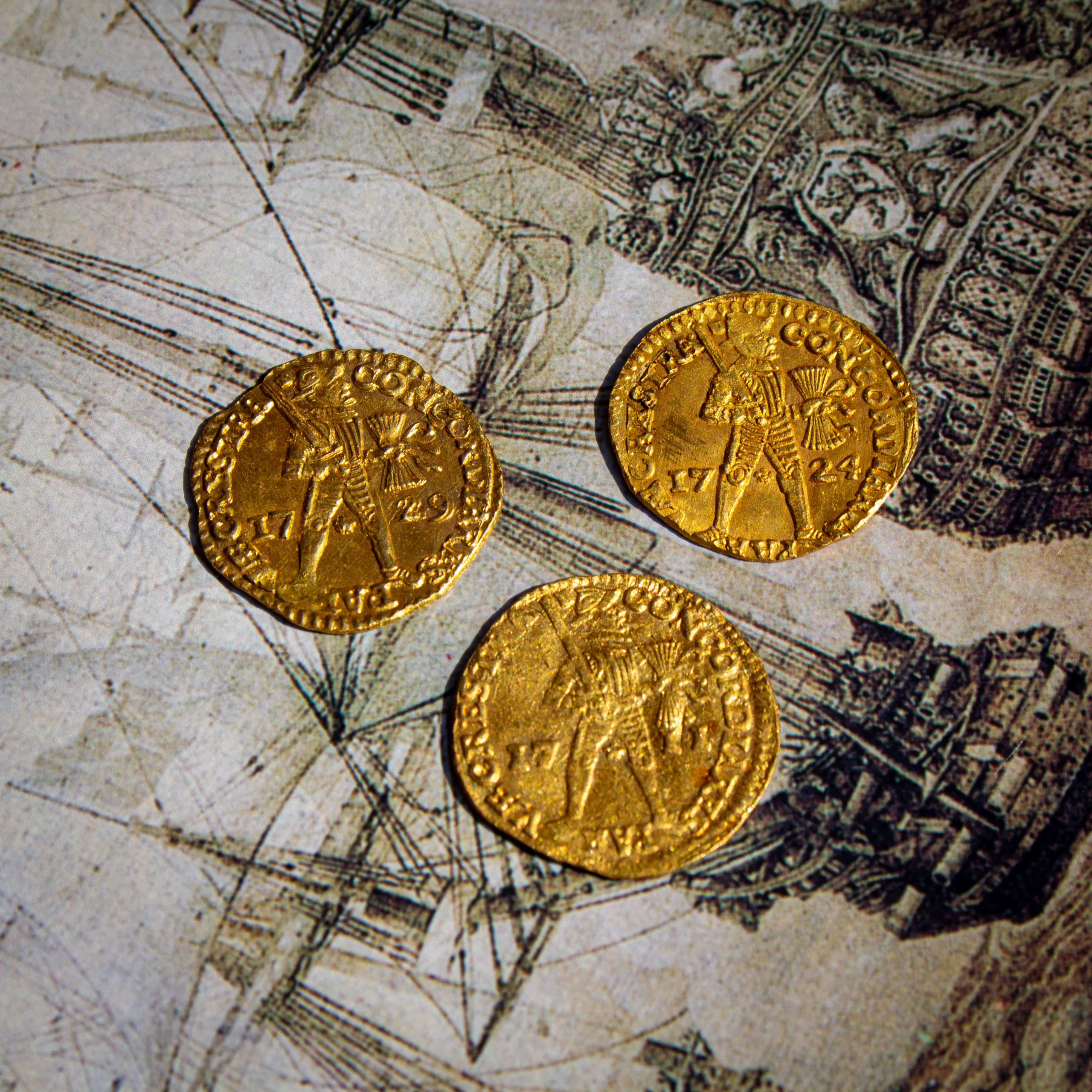
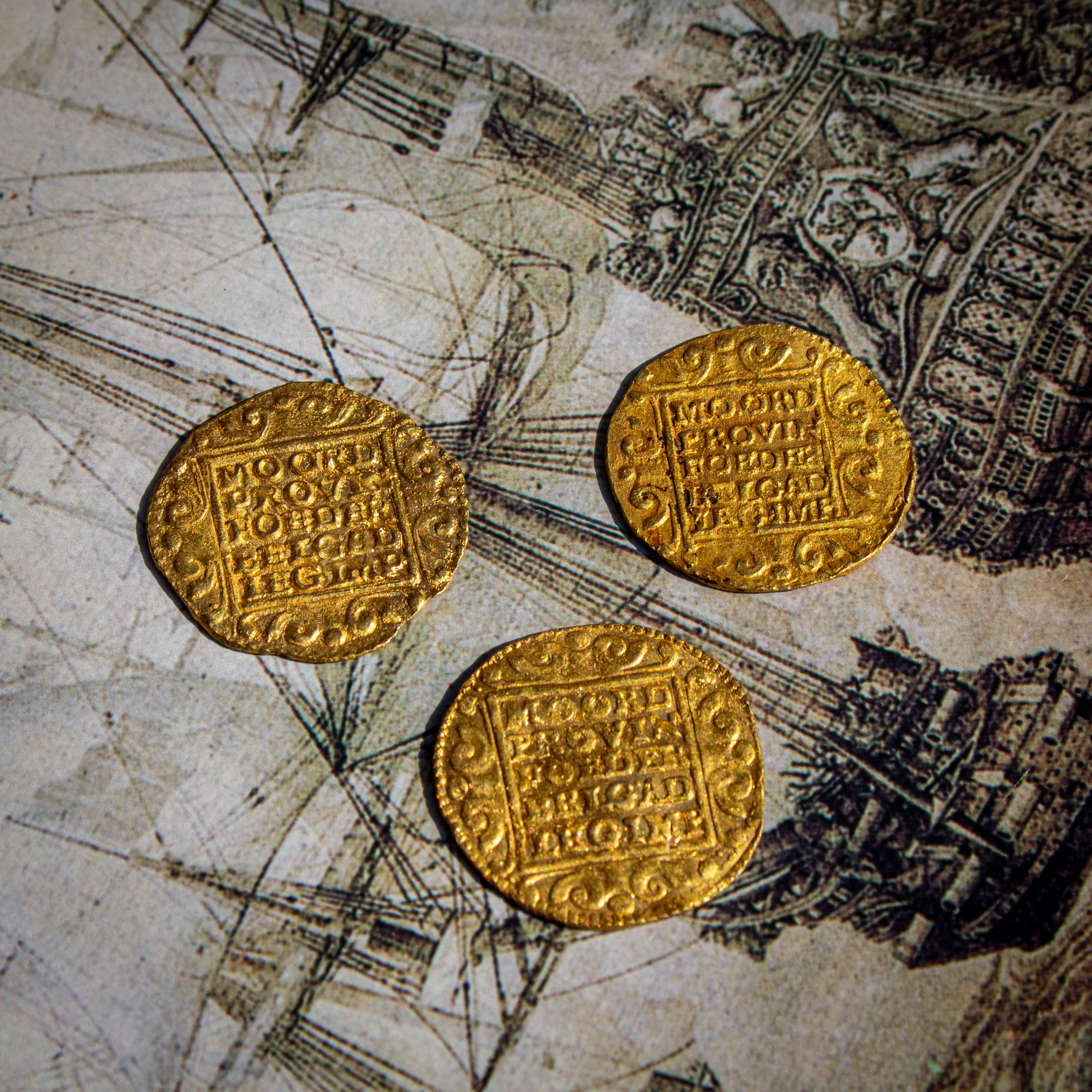
Due to their limited shipment, only three recovered VOC shipwrecks have yielded freshly minted gold ducats: De Liefde, Akerendam, and Vliegenthart. These coins are unique in that they never entered circulation and generally remained in pristine condition. This set brings together a gold ducat from each of these three rare shipwreck finds.
To finance its extensive trade network, the VOC sent approximately 15 to 20 treasure-laden ships to the East each year. Among the cargo, a wide variety of coins were transported. In the early years, Spanish colonial reales dominated Asian trade, but from around 1630 onwards, Dutch trade coins gained increasing prominence. The most famous of these was the Dutch gold ducat.
Gold ducats were shipped in much smaller quantities than silver trade coins. In the 17th century, they were transported in modest numbers, with shipments increasing somewhat in the 18th century. Most gold ducats were intended for recoining at South Indian mints, although some entered circulation in the Indonesian Archipelago and Ceylon.
Due to their limited shipment, only three recovered VOC shipwrecks have yielded freshly minted gold ducats: De Liefde, Akerendam, and Vliegenthart. These coins are unique in that they never entered circulation and generally remained in pristine condition. This set brings together a gold ducat from each of these three rare shipwreck finds.
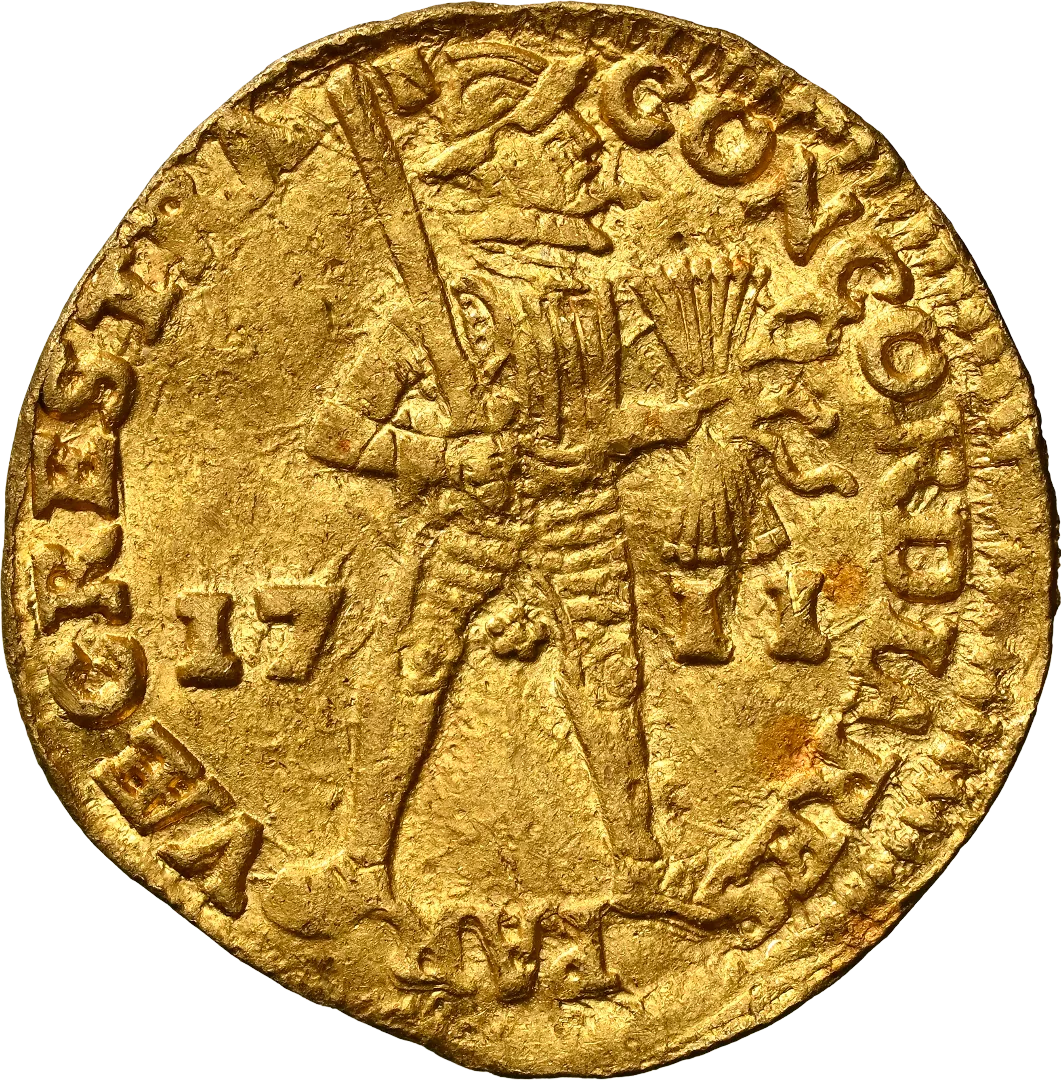
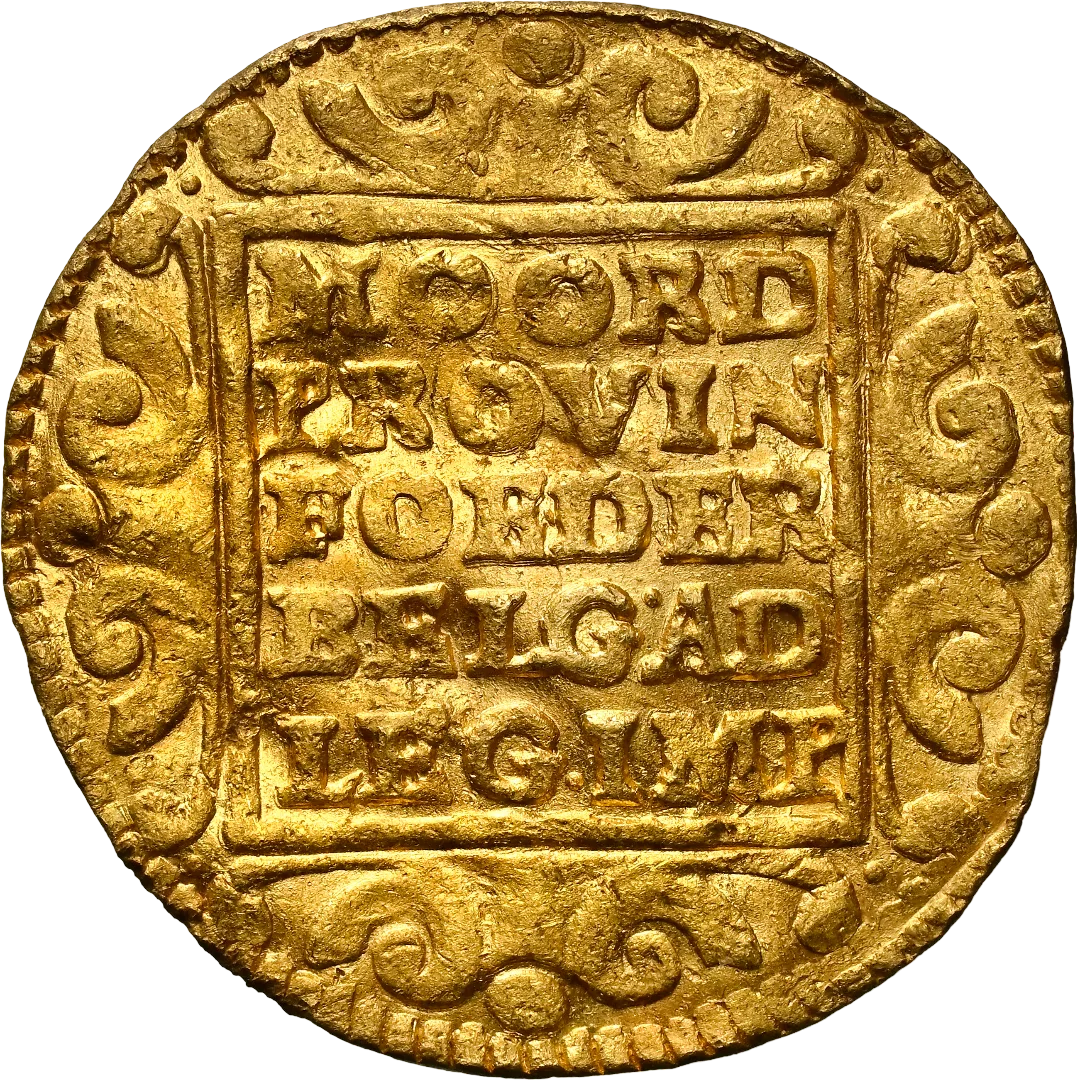
De Liefde, a swift and lightly built pinas, departed Texel on November 3, 1711, as part of a VOC convoy bound for Batavia. To avoid winter storms and English warships, the fleet took a northerly route through the North Sea. Just four days later, De Liefde ran aground on a reef off the Scottish coast and was lost. Of the 300 souls aboard, only one sailor survived to tell the tale.
Among the ship’s lost cargo was a consignment of freshly minted, hand-struck gold ducats, produced in Utrecht earlier that same year. In very scarce quantities they came to light again after the coincidental rediscovery of the wreck in 1964. In the decades that followed, salvage operations continued, but not many more of the rare 1711 Utrecht mint gold ducats were found.
The exact number of ducats recovered from the wreck remains unknown, partly due to early, undocumented salvage by locals soon after the sinking. Later Dutch diving expeditions between 1729 and 1735 also recovered an unknown quantity, further complicating efforts to determine how many ducats were originally aboard and later retrieved.
Despite being small in number, ducats from this shipwreck generally show some typical characteristics including wavy flans, slight bending, and rough, damaged surfaces caused by the challenging underwater terrain and prolonged maritime environment. However, the ducats still show uncirculated details, as they were newly minted when they were carried aboard the merchant.
The Akerendam set sail from Texel on January 17, 1725, embarking on her maiden voyage to the Dutch East Indies. Taking the northern route around Scotland, the ship encountered a snowstorm in the North Sea. The East Indiaman veered off course and eventually ran aground near the island of Runde in Norway. Of the approximately 200 people on board, none survived the shipwreck.
Contemporary salvage attempts recovered a few chests containing silver coins, but there was no trace of the valuable cargo of gold ducats. This changed in July 1972, when three amateur divers made a discovery beyond their wildest dreams. While diving from a tourist boat off the Norwegian coast, they located the wreck of the long-lost Akerendam.
More than 23 kilograms of gold ducats were recovered. In total, nine different types of ducats were found, but approximately 99 percent of the coins were of the same type and year: hand-struck Utrecht ducats from 1724. Of the 6,624 gold ducats discovered, 6,505 belonged to this specific category.
The scale of this discovery not only made it the largest gold find in Norwegian history but also the greatest collection of gold ducats ever recovered. Despite the coins being scattered across the seabed and the original chests long since decayed, the gold coins from this shipwreck are generally in remarkably good condition.
On February 3, 1735, the East Indiaman Vliegenthart set sail from Rammekens, bound for Batavia. Just a few hours later, the ship sank, taking all 256 crew members and its valuable cargo with it. Salvage attempts were made shortly after the sinking, but they recovered almost nothing and were soon abandoned.
It was not until 1981, using modern search techniques, that the wreck of the Vliegenthart was rediscovered. Among the most spectacular finds were large quantities of gold ducats, which quickly captured attention. In the first recovery campaign, around 160 gold ducats were found scattered across the seabed — clear evidence that at least one money chest had broken apart during the sinking.
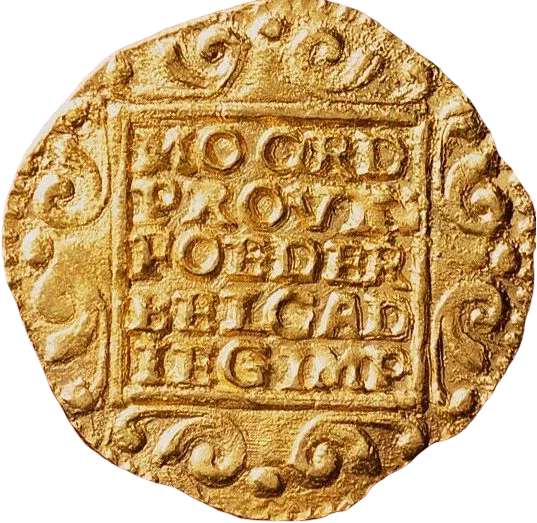
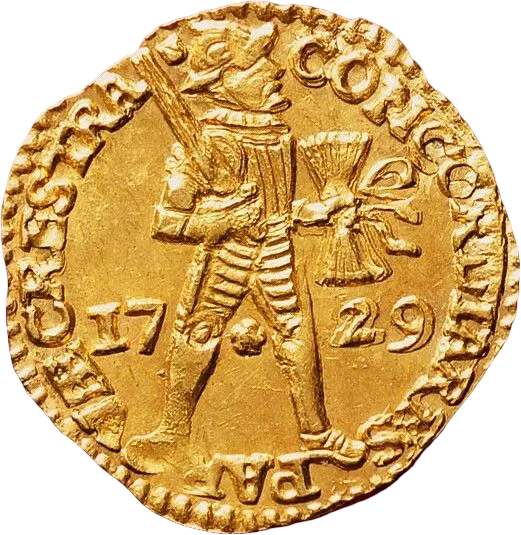
The following year, an entire intact chest was brought to the surface, containing nearly 2,000 gold ducats. Over the subsequent years, more individual ducats were recovered, culminating in the 1992 discovery of a third unbroken money chest, also filled with ducats.
In total, 5,160 uncirculated gold ducats were recovered from the wreck. These included 1,000 West Frisian and 1,980 Holland ducats — both machine-minted and dated 1729 — as well as 1,164 hand-struck Utrecht ducats from 1729 and 16 more from 1728. The gold ducats recovered from the Vliegenthart are among the finest and best-preserved examples ever found.