
Home > Shipwreck Blogs > De Lastdrager: The Belly of the Beast
When I plunged into the cold sea off Cussa Ness, the tide was ripping and pulling me at some rate of knots. I had to reach bottom or I was in big trouble. A lone diver is one thing, but a lone diver being dragged down the Bluemull Sound would be another thing. I managed to grab a piece of kelp with one hand, and pull myself hand over fist, downward into the forest. I continued down and settled myself into a deep gully, bedded in small rocks and sand. The trench I had nestled myself into was beautiful. Visibility could not have been better. I looked up towards the surface, and saw that my headphones were floating above me. The tide must have been so strong that it took my headset clean off. I pulled the line in carefully like a length of twine and set the phones back on my head. I took one last look at my RIB (Rigid Inflatable Boat) on the surface, the tide motion swirling at the stern. Steady, she wasn’t going anywhere.
I had read about the wreck of De Lastdrager over the years, almost obsessively. How the rat-infested Dutch East Indiaman, had smashed onto the rocks on one of Shetland’s most northerly isles in the dead night. Winters can be long and cruel in Shetland, particularly for a half-dressed lone survivor on foreign soil. What made the story more attractive to treasure hunters, was that the sole survivor gave his own account of the wrecking that night. How the ship broke in two, with the treasure laden stern half being torn away with the tide.
When I plunged into the cold sea off Cussa Ness, the tide was ripping and pulling me at some rate of knots. I had to reach bottom or I was in big trouble. A lone diver is one thing, but a lone diver being dragged down the Bluemull Sound would be another thing. I managed to grab a piece of kelp with one hand, and pull myself hand over fist, downward into the forest. I continued down and settled myself into a deep gully, bedded in small rocks and sand. The trench I had nestled myself into was beautiful. Visibility could not have been better. I looked up towards the surface, and saw that my headphones were floating above me. The tide must have been so strong that it took my headset clean off. I pulled the line in carefully like a length of twine and set the phones back on my head. I took one last look at my RIB (Rigid Inflatable Boat) on the surface, the tide motion swirling at the stern. Steady, she wasn’t going anywhere.
Nearly 400 years after the wrecking, a diver named Robert Stenuit discovered the site, and found numerous artefacts, navigational instruments, grenades, compasses, musket balls, cannons and a small number of coins. Yet, nothing compared to archival records. This was further evidence that backed up the survivors story, and that the doomed vessel had actually broke in two. Stenuit searched and searched, however they concluded that the stern half had either broken up in a similar way on a distant headland, or swept into deeper water out the sound.
I had read about the wreck of De Lastdrager over the years, almost obsessively. How the rat-infested Dutch East Indiaman, had smashed onto the rocks on one of Shetland’s most northerly isles in the dead night. Winters can be long and cruel in Shetland, particularly for a half-dressed lone survivor on foreign soil. What made the story more attractive to treasure hunters, was that the sole survivor gave his own account of the wrecking that night. How the ship broke in two, with the treasure laden stern half being torn away with the tide.
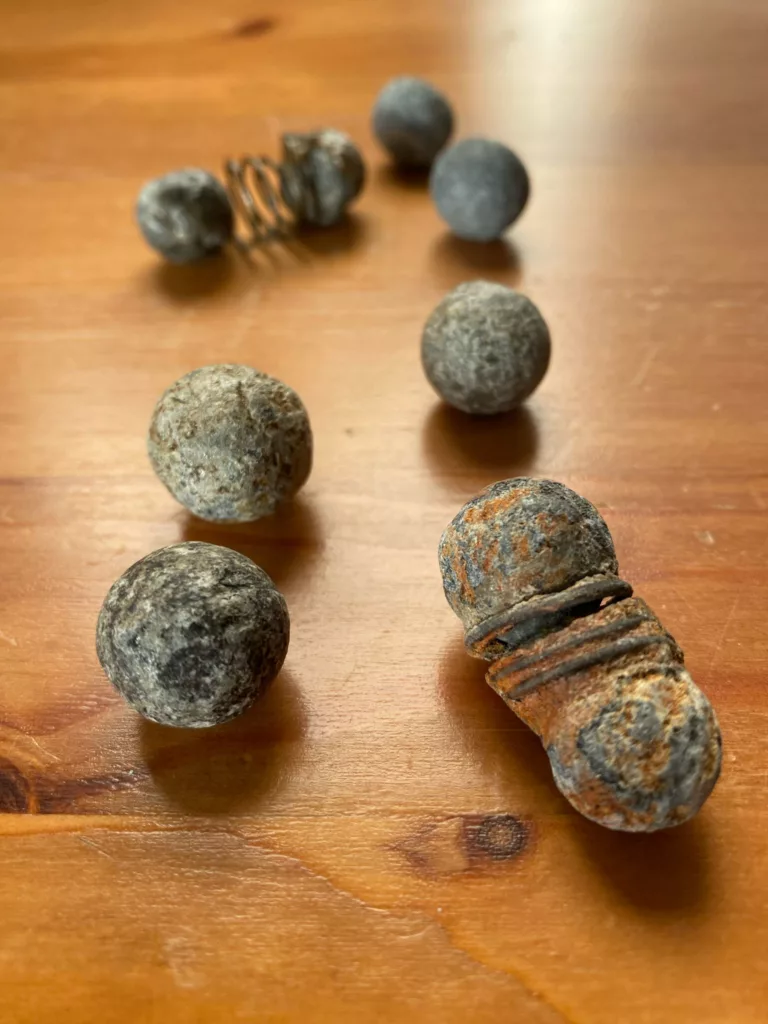
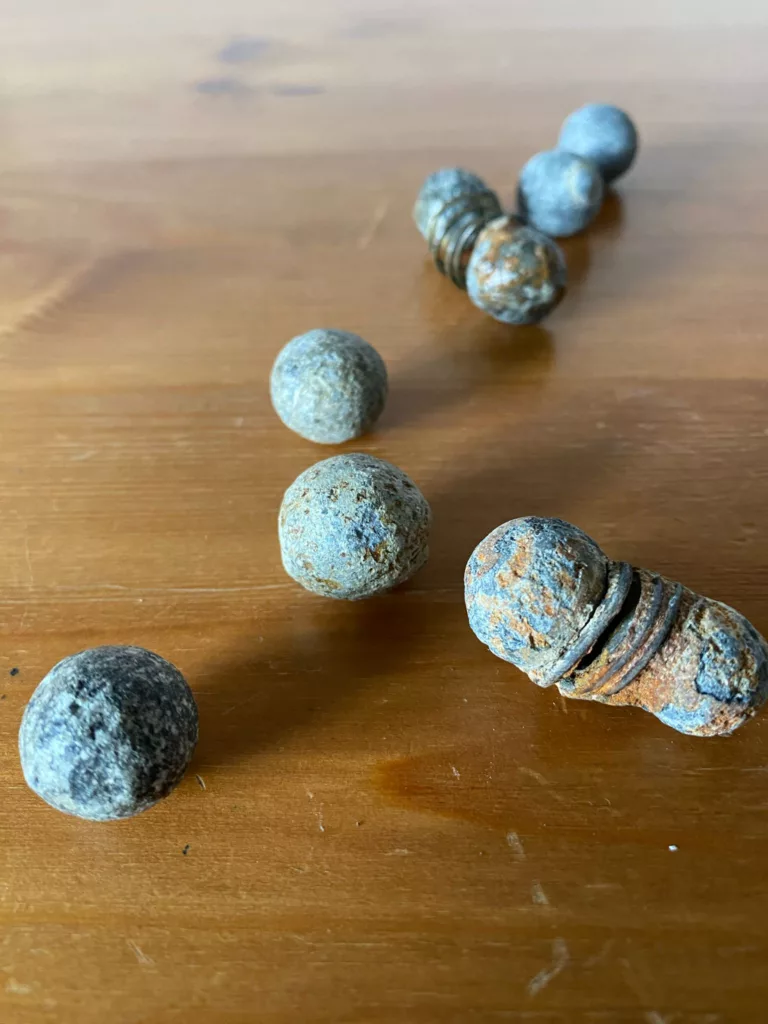
The dream had become reality, I was here. I turned my detector on which I held in my right hand, and set the sensitivity. Four clear beeps rang out to let me know the batteries were fully charged. I moved the detector towards my weight belt, to make sure it was working. It wasn’t long before I picked up a signal. I fanned the area of sand and stones with my left hand. There it was, the unmistakable shape of a perfectly round lead musket ball. I picked it up and rolled it in front of my mask between my thumb and forefinger. For over three hundred years this neat little artefact had lain on the seabed, and now it was in my hand. I popped the ball in my net and scanned the same patch. It beeped again, and again, and again. One after another, I fanned, I picked and I popped them in the net. I noticed there were two different calibre, one size for musket shot and the other smaller calibre was pistol shot. The next one I came across was perhaps the most interesting of all. A double musket shot, linked with what looked like a brass wire between the two. One can only imagine the damaging effect that shot would have if fired from a musket, and into the flesh of a man.
Nearly 400 years after the wrecking, a diver named Robert Stenuit discovered the site, and found numerous artefacts, navigational instruments, grenades, compasses, musket balls, cannons and a small number of coins. Yet, nothing compared to archival records. This was further evidence that backed up the survivors story, and that the doomed vessel had actually broke in two. Stenuit searched and searched, however they concluded that the stern half had either broken up in a similar way on a distant headland, or swept into deeper water out the sound.
The dream had become reality, I was here. I turned my detector on which I held in my right hand, and set the sensitivity. Four clear beeps rang out to let me know the batteries were fully charged. I moved the detector towards my weight belt, to make sure it was working. It wasn’t long before I picked up a signal. I fanned the area of sand and stones with my left hand. There it was, the unmistakable shape of a perfectly round lead musket ball. I picked it up and rolled it in front of my mask between my thumb and forefinger. For over three hundred years this neat little artefact had lain on the seabed, and now it was in my hand. I popped the ball in my net and scanned the same patch. It beeped again, and again, and again. One after another, I fanned, I picked and I popped them in the net. I noticed there were two different calibre, one size for musket shot and the other smaller calibre was pistol shot. The next one I came across was perhaps the most interesting of all. A double musket shot, linked with what looked like a brass wire between the two. One can only imagine the damaging effect that shot would have if fired from a musket, and into the flesh of a man.
Sullivan encountered the mercury once more when he dove on De Kennemerland, which is shown in the footage above. It gives an accurate impression of what Sullivan encountered when diving for De Lastdrager.
I carried on detecting through the maze of gulleys and came across one of the ships guns. It was in a poor state and even had a piece of the muzzle missing. I guess having spent the last three centuries in the North Sea, it certainly wasn’t going to be pristine. I picked up a really strong signal on the detector, in a big area. Another gun perhaps? A clump of coins? I put my detector to one side, and I started to excavate the area. I moved the rocks first and then began fanning again with my hand. As I got further down into the hole, the sand became clearer and finer. It moved strangely, like something was alive. I fanned more slowly this time, and watched as the sand rippled from the motion. I cleared more of the sand as gently as I could, not to disturb the silvery substance beneath. The mystery was unfolding, I wasn’t dreaming, it was mercury. I could see my own reflection in the pool of silver liquid. The clearest mirror image of myself was staring rite back at me. A submerged rock pool of silver poison beneath the waves.
Sullivan encountered the mercury once more when he dove on De Kennemerland. Although the above footage does therefore not originate from his diving session on De Lastdrager, it gives an accurate impression of what Sullivan encountered.
Mesmerised in awe, I noticed my air demand was becoming laboured. The scuba bottle on my back became noticeably buoyant, which meant it was time to surface. I was shallow enough not to be worried about decompression. Still in amazement, I knew I had just created an image I would carry with me, for the rest of my days.