
Home > Shipwreck Blogs > Massive Bredenhof Shipwreck Duit Scam
“Probably the biggest counterfeiter in modern times.” That’s how Terrie L. Sullivan of Gulfstream Rarities, Inc. has been described. Operating under this deceptive company name, Sullivan took genuine coins and created countless cast copies. Gulfstream Rarities began its illicit operations in 1990 and continued for many years before finally ceasing activity in 2006. With low prices and mass production, the company — always presenting itself as “your premier source for collectibles” — flooded the market with worthless replicas of coins from various shipwrecks, even including the more common Bredenhof duit coins.
Thousands of fake coins were produced and typically sold framed, accompanied by generic certificates. This presentation made it difficult for the untrained eye to detect the fakes. The most infamous products were the frames containing counterfeit coins from five shipwrecks — including fake Atocha and 1715 Fleet coins — as well as Bredenhof duits. These frames, produced by Sullivan’s own framing business, concealed the coins’ inauthenticity, as buyers were often reluctant to dismantle the displays. However, many of his replica coins also appeared on the market loose or in simple presentation boxes.
Gulfstream Rarities issued its own certificates, signed by Terrie Sullivan, and even forged well-known certificates from other sources. The most notorious forgeries copied the lightly embossed Cobb Coin Company certificates from Mel Fisher, with a seal that — upon close inspection — read “Gulfstream Rarities Inc,” clearly revealing their fraudulent origin. In the case of the Bredenhof duit scam, Sullivan reproduced generic certificates originally used by Christie’s during the 1986 Bredenhof Bullion auction in Amsterdam.
Thousands of fake coins were produced and typically sold framed, accompanied by generic certificates. This presentation made it difficult for the untrained eye to detect the fakes. The most infamous products were the frames containing counterfeit coins from five shipwrecks — including fake Atocha and 1715 Fleet coins — as well as Bredenhof duits. These frames, produced by Sullivan’s own framing business, concealed the coins’ inauthenticity, as buyers were often reluctant to dismantle the displays. However, many of his replica coins also appeared on the market loose or in simple presentation boxes.
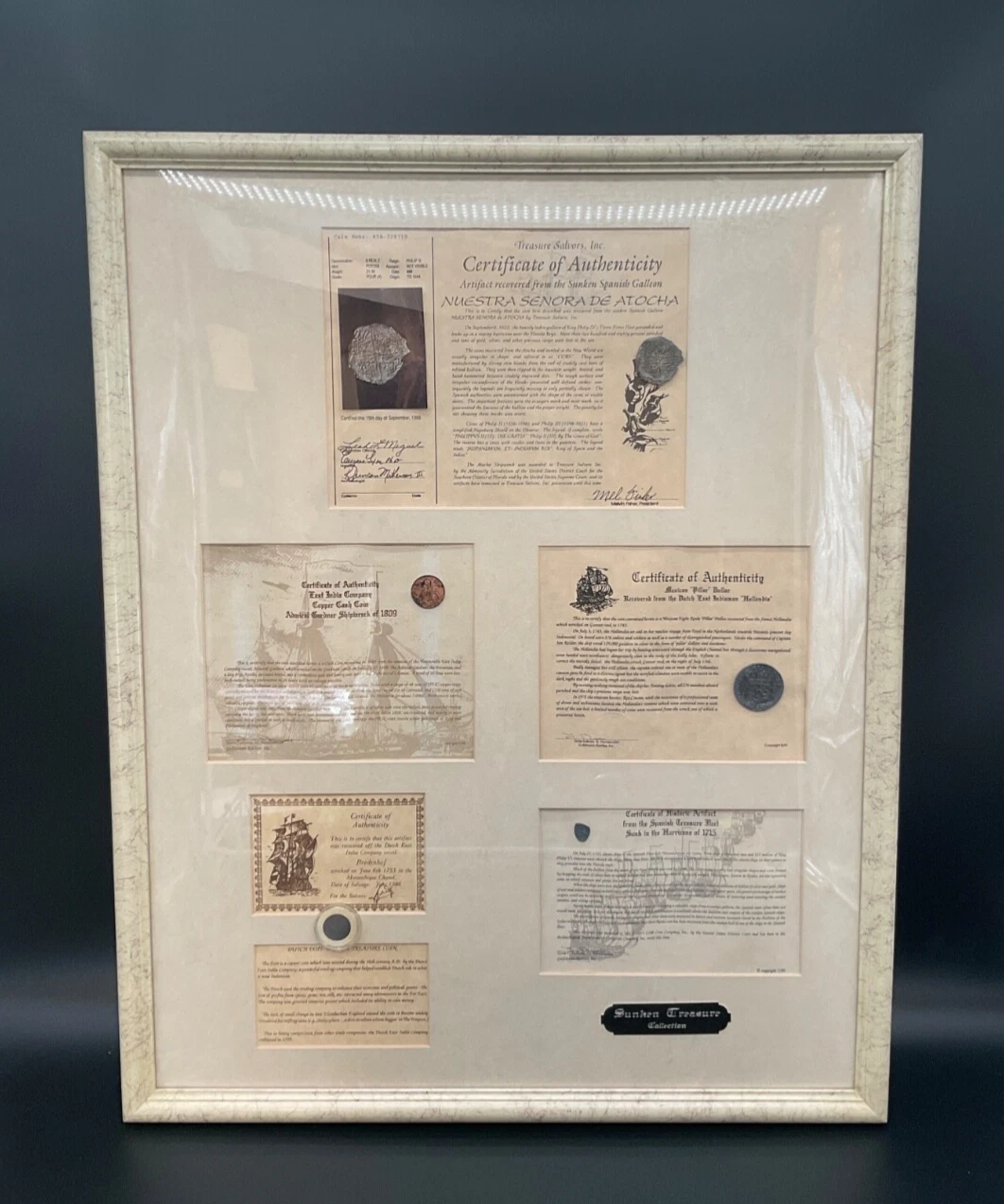
Gulfstream Rarities issued its own certificates, signed by Terrie Sullivan, and even forged well-known certificates from other sources. The most notorious forgeries copied the lightly embossed Cobb Coin Company certificates from Mel Fisher, with a seal that — upon close inspection — read “Gulfstream Rarities Inc,” clearly revealing their fraudulent origin. In the case of the Bredenhof duit scam, Sullivan reproduced generic certificates originally used by Christie’s during the 1986 Bredenhof Bullion auction in Amsterdam.
The counterfeit coins produced by Sullivan were cast copies — one of the most common methods of forgery. When executed skillfully, casting can produce coins that very closely resemble originals. However, many 17th- and 18th-century coins were hand-struck, making each piece unique. To mimic this uniqueness, Sullivan sometimes trimmed his cast copies to slightly alter their appearance. This was especially a common practice with his fake 1715 Fleet coins.
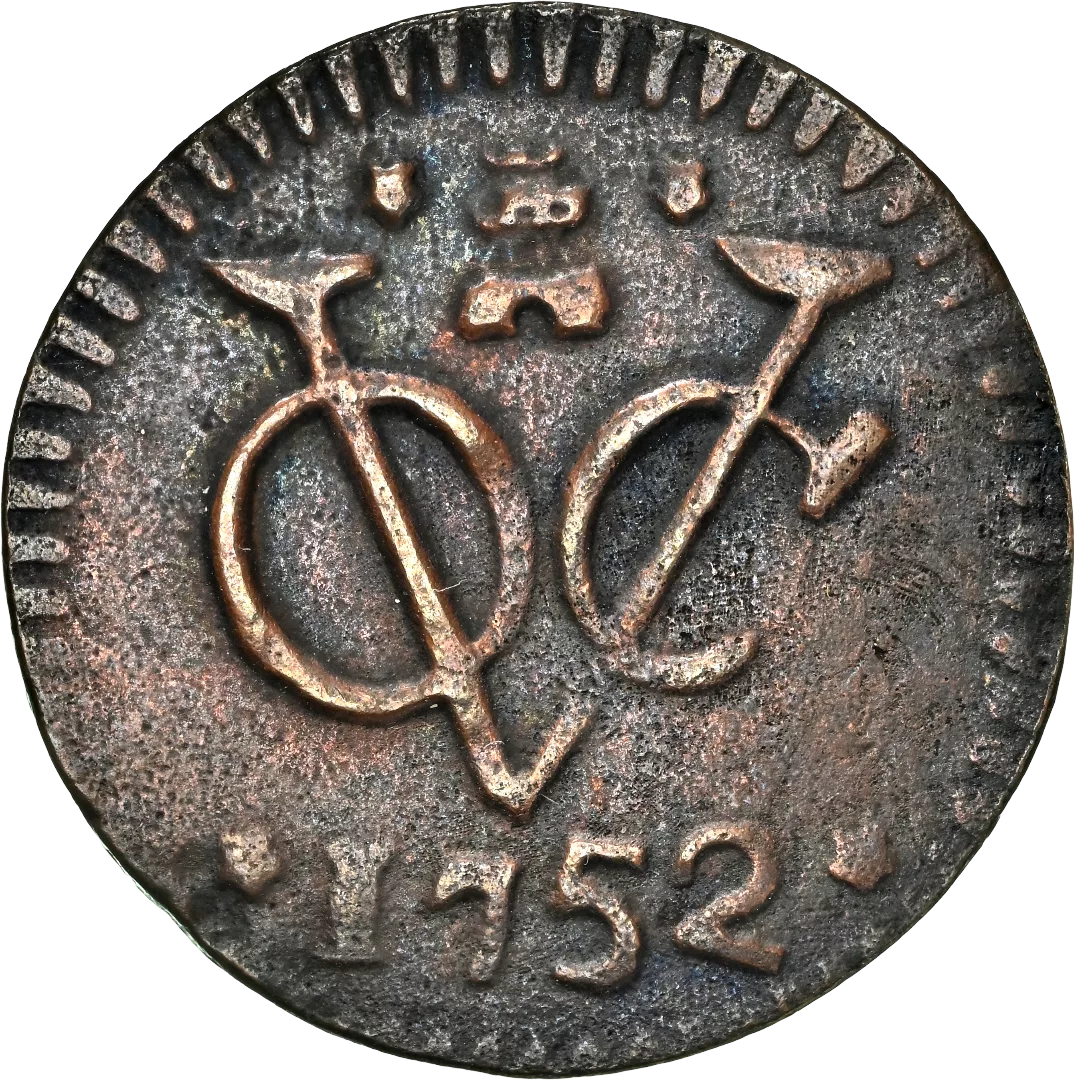
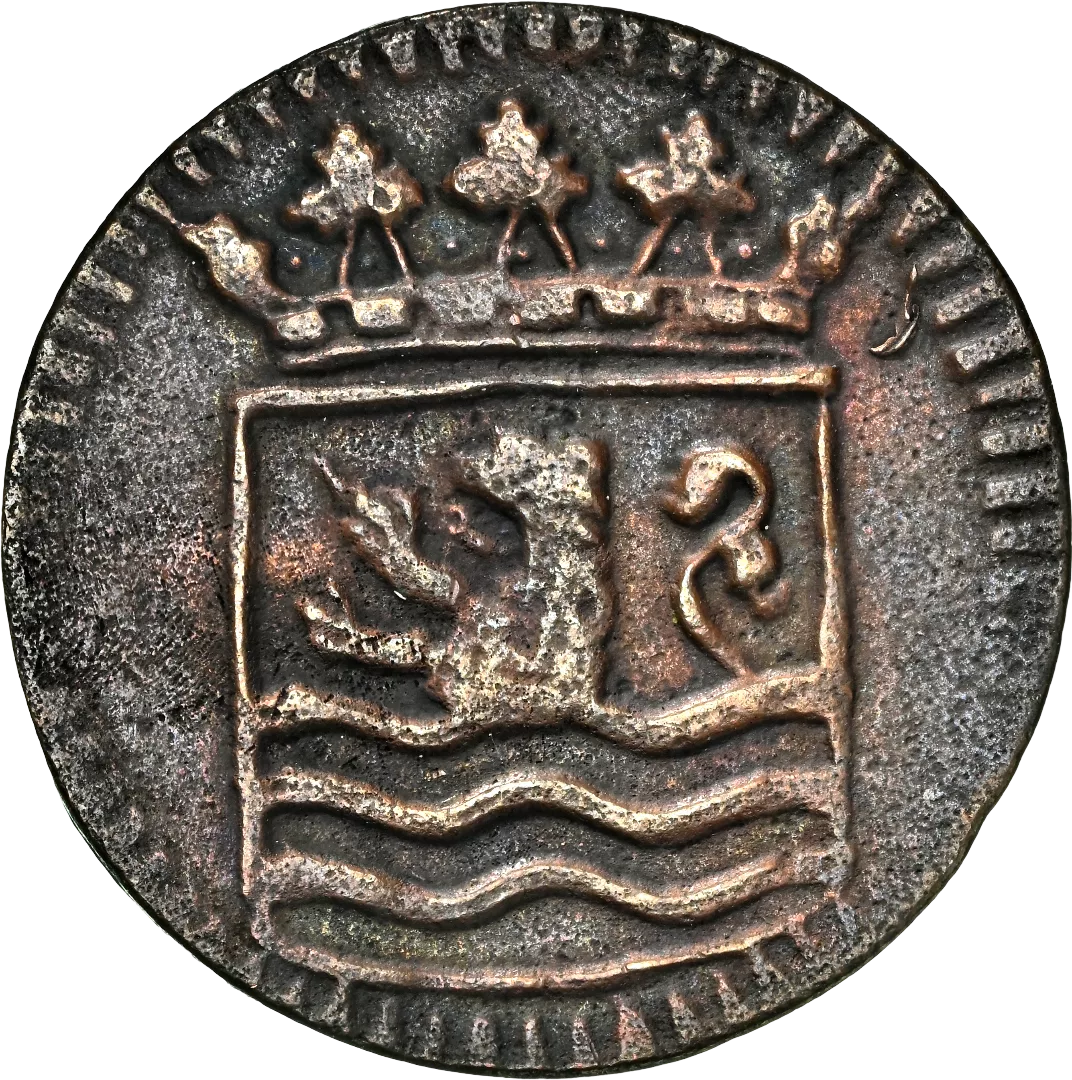
For the thousands of 1752 Zeeland-mint duit replicas, Sullivan used a single mold, resulting in identical features across all copies. One telltale sign is a pit below the star on the left side of the date. A faint dent on the coin’s edge at this same spot is another typical marker. Ironically, the obverse offers yet another clue: on every fake, the lion appears to be giving the middle finger. Naturally, the VOC monogram and the shield are identically positioned in all these fake duits.
While Gulfstream Rarities’ fraudulent activities have been known within the numismatic community for some time, it was not previously recognized that they had also faked the relatively common Bredenhof duits. Major auction houses have unknowingly sold lots containing dozens of these forgeries — described as originals — for thousands of dollars. These fakes continue to appear on platforms like eBay, clearly showing the scale of this massive Bredenhof shipwreck duit scam. It is therefore crucial to stay informed and learn how to recognize these counterfeits.
The counterfeit coins produced by Sullivan were cast copies — one of the most common methods of forgery. When executed skillfully, casting can produce coins that very closely resemble originals. However, many 17th- and 18th-century coins were hand-struck, making each piece unique. To mimic this uniqueness, Sullivan sometimes trimmed his cast copies to slightly alter their appearance. This was especially a common practice with his fake 1715 Fleet coins.
For the thousands of 1752 Zeeland-mint duit replicas, Sullivan used a single mold, resulting in identical features across all copies. One telltale sign is a pit below the star on the left side of the date. A faint dent on the coin’s edge at this same spot is another typical marker. Ironically, the obverse offers yet another clue: on every fake, the lion appears to be giving the middle finger. Naturally, the VOC monogram and the shield are identically positioned in all these fake duits.
While Gulfstream Rarities’ fraudulent activities have been known within the numismatic community for some time, it was not previously recognized that they had also faked the relatively common Bredenhof duits. Major auction houses have unknowingly sold lots containing dozens of these forgeries — described as originals — for thousands of dollars. These fakes continue to appear on platforms like eBay, clearly showing the scale of this massive Bredenhof shipwreck duit scam. It is therefore crucial to stay informed and learn how to recognize these counterfeits.
Did you enjoy this blog? Be sure to check out our TikTok for more stories like this, or visit our shop to own a piece of maritime history yourself!
One Response
Thank you for this valuable information. I Just bought one of these framed Counterfeits from Goodwill online.
I thought this seems to good to be true. I paid $870. Luckily, it was on my AX. I’m hoping that they refund the charge. I looked and they are very good fakes. I have 20+ Atocha coins in my collection. The only thing I was concerned with on the certificate of Authenticity was only the one side of the cob was pictured. I thought it was just a very early certificate. Scammers errrrrrrr